
Riolo Terme
A city of waters, already known to the Romans for their valuable therapeutic properties, the Terme di Riolo cures body and spirit with precious natural treasures: the excellent medicinal waters and the very fine spring mud.
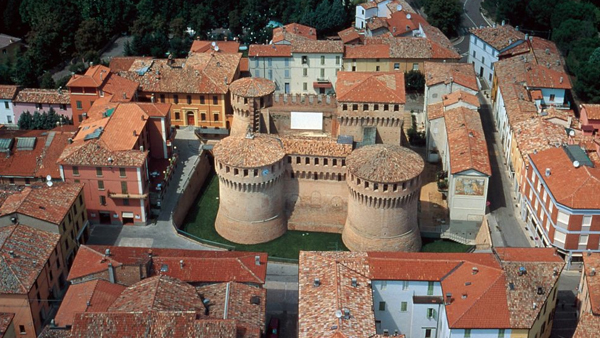
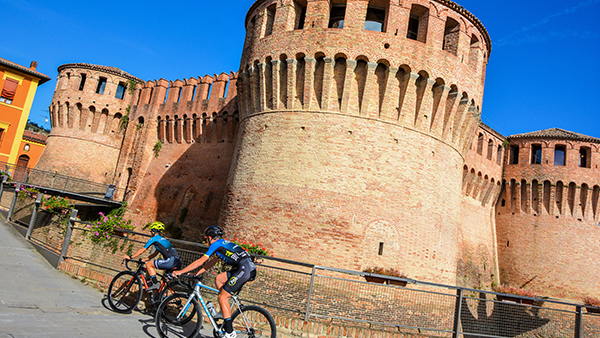
The village, surrounded by walls, is gathered around the Rocca Sforzesca, a superb example of a 14th-century military fortification that evokes distant atmospheres, linked to the times when it was the legendary Caterina Sforza. Also in the Rocca, the Faenza Apennine Landscape Museum presents artifacts from the Parco regionale della Vena del Gesso Romagnola, of which this area is a part.
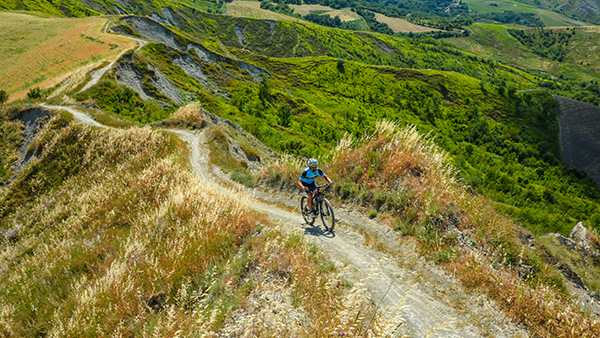
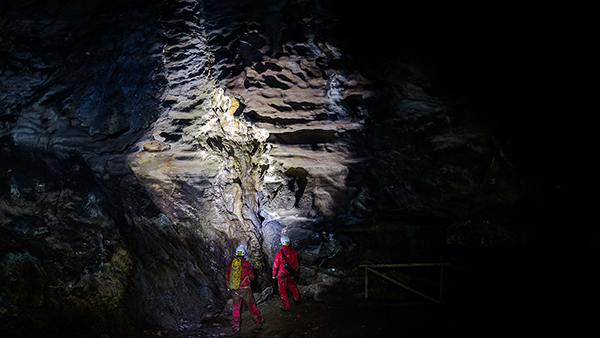
An environment of great natural, scenic and historical archaeological interest, the Parco Regionale della Vena del Gesso Romagnola hides a network of more than 200 caves, some of which can be visited and have obvious signs of human habitation in prehistoric times, such as the Cave of King Tiberius. On the surface, spectacular landscapes such as the Riva di san Biagio, peaks from which the Adriatic Sea can be glimpsed such as Monte Mauro, and a network of impressive trails. The park is traversed by the Alta Via dei Parchi and the St. Anthony Trail.
The excellences of Riolo Terme

Shallot of Romagna PGI
In this area the Scalogno di Romagna PGI, has found a particularly favorable habitat, so much so that Riolo also dedicates a festival to it, in July. This bulb, which combines the characteristics of the onion, garlic, and leek, has always been a major player in local cuisine: raw, pickled, or as a condiment for pasta, its distinctive aroma enhances the flavor of any dish.
The violet-white color, spread over the flask shape, is inviting and suggests tasty summer appetizers or hearty autumn preparations.
It is also ideal for preparing ragù or as a side dish, in both oil-preserved and pickled versions.
Active City of Wine, Riolo Terme invites you to walk the Sangiovese Trail that winds through the municipalities of Faenza, Brisighella and Casola Valsenio.

La Saba (or Sapa)
Among traditional agri-food products, saba is the ideal topping and flavoring agent for fresh fruit and cream ice cream. Called sapa in the Cesena and Rimini areas, it is made by slowly simmering must and simmers between ten and sixteen hours to a reduction of more than 2/3 of the initial volume. It is made from white grapes-usually of the Trebbiano variety-that are crushed fresh and, while cooking the syrup inside the copper pot, nuts with the shells are added to prevent the liquid from sticking to the bottom.
It has a long tradition behind it that in part confirms its ancient origins. It is certain that saba was used as early as Roman times (the name comes from the Latin sàpor meaning flavor). Evidence of this can be found, for example, in some of the writings of the gastronome Marcus Gavadius Apicius.
Its perfect pairing is with Fossa cheese, but it also goes excellently with polenta, desserts like ciambella, or spread on a piadina.
As for beverages, the genuine flavor of saba is particularly enhanced when sipped with a glass of Sangiovese or Albana passita.


